Jayanta Roy Chowdhury

Jayanta Roy Chowdhury

About Jayanta Roy Chowdhury

More From Jayanta Roy Chowdhury

Aid, Ports, And The Limits of Incrementalism: What India’s Budget Says About Its Foreign Policy

Yet the strategic costs are real. Reduced engagement in Bangladesh risks ceding influence at a moment when Dhaka is actively diversifying its partnerships. Hesitation over Chabahar weakens India’s leverage in Iran and Central Asia and underscores its vulnerability to US pressure even as it seeks a more multipolar foreign policy. The 2026–27…

India's New Grammar of Energy Diplomacy

If there is a doctrine emerging from this moment, it is one of managed interdependence. India’s 25 percent import cap is not just a regulatory rule; it’s a political philosophy. It enshrines diversification as a matter of national security, insulating the economy from both volatility and coercion. No single country — whether Russia, Saudi…

Myanmar: Bitter Contest For Influence In Indo-Pacific’s Most Volatile Frontier

The convergence of instability in Myanmar, fragility in Bangladesh, and external meddling by China and Pakistan threatens to form a volatile arc along India’s eastern flank. The challenge for New Delhi is not to pick sides in Myanmar’s internal war but to manage outcomes—to stay present, relevant, and nimble while others overreach. Because when…

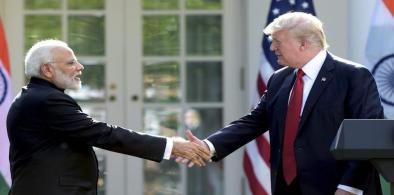
A Reset in the Making? Modi, Trump Reboot India-US Trade Ties

The Modi-Trump conversation may appear transactional, but its implications are strategic. If the trade agreement concludes by November, it could mark a turning point, redefining not just tariffs, but the trajectory of India’s global engagement.

Bangladesh’s Dangerous Game: Alienating Tribals Can Have Far-Reaching Regional Consequences

Bangladesh risks not just unrest in its hills but becoming an unwilling participant in a global proxy war. The fires of Khagragachi may be small compared with the wars across the border, but left untended, they could burn far beyond Bangladesh’s control.

Saudi Arabia-Pakistan Security Pact Has Strategic And Economic Ramifications

By outsourcing its defence to Pakistan and, indirectly, to China, Riyadh has loosened its obligations. Freed from Washington’s security leash, the Saudis can theoretically price oil in whatever currency they choose. The fact is that any disruptions in the riyal-dollar relationship would risk global financial equilibrium and undermine investor…

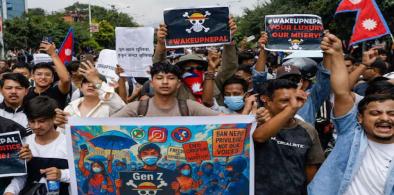
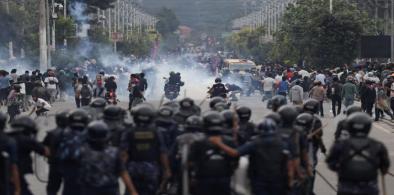
Nepal At Crossroads: Coming Elections Will Decide The Country's Political Identity

For the Indian government, the interim Karki administration offers a valuable interlocutor who understands both the cultural and strategic sensitivities of bilateral relations. Supporting her government’s limited but crucial agenda aligns with New Delhi’s interest in maintaining regional stability, securing cross-border trade, and containing…

India at a Crossroads: Navigating Stability and Sovereignty in Neighbouring Nepal’s Crisis

Nepal, one of  the world’s poorest countries, struggles with the South Asian region’s lowest per capita income and an unemployment rate approaching 13 percent, according to official estimates.

Trump & Modi: Rekindling the Bromance!

Yet, amid this global chess game, the Trump-Modi tweets reminded us of one undeniable fact: politics is now as much about social media bromance as it is about border disputes and trade wars.

Strange Bedfellows: Why Pakistan’s Munir and Bangladesh’s Yunus Are Rekindling Ties

From a realistic perspective, the prospect of a Pakistan-Bangladesh axis does not herald a serious economic or strategic bloc. Instead, it signals the re-emergence of revisionist politics in South Asia. In seeking to rewrite history and align against India, both countries risk ignoring their own domestic crises.